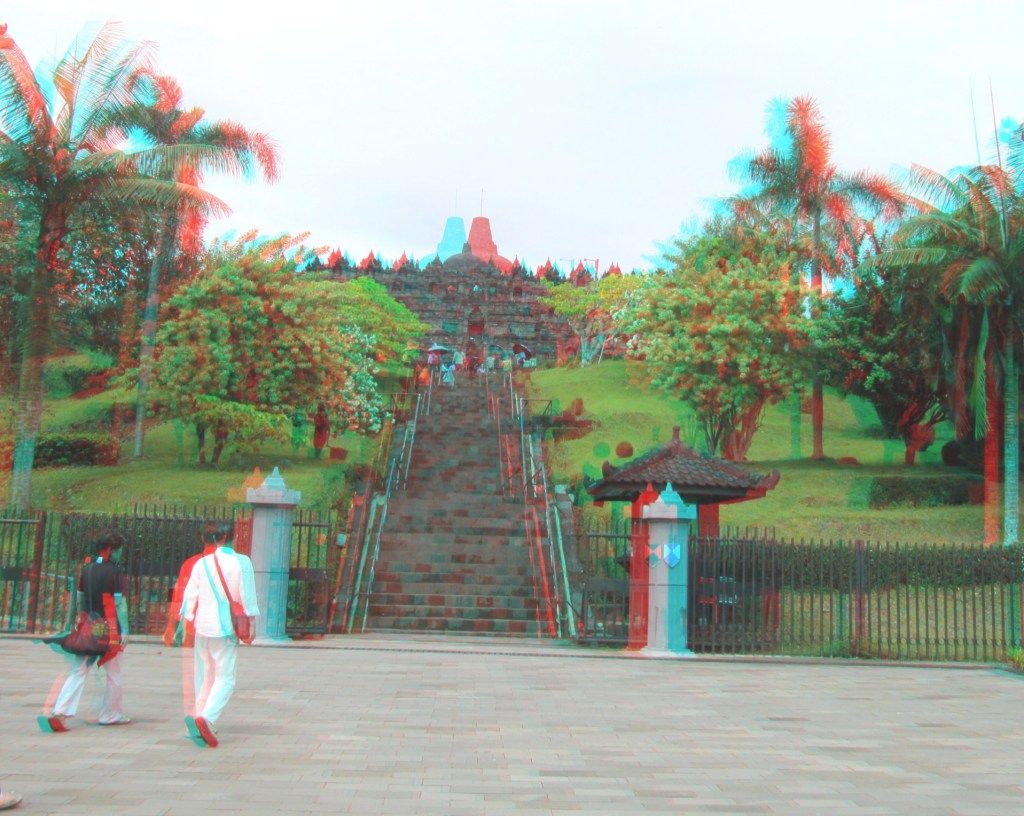
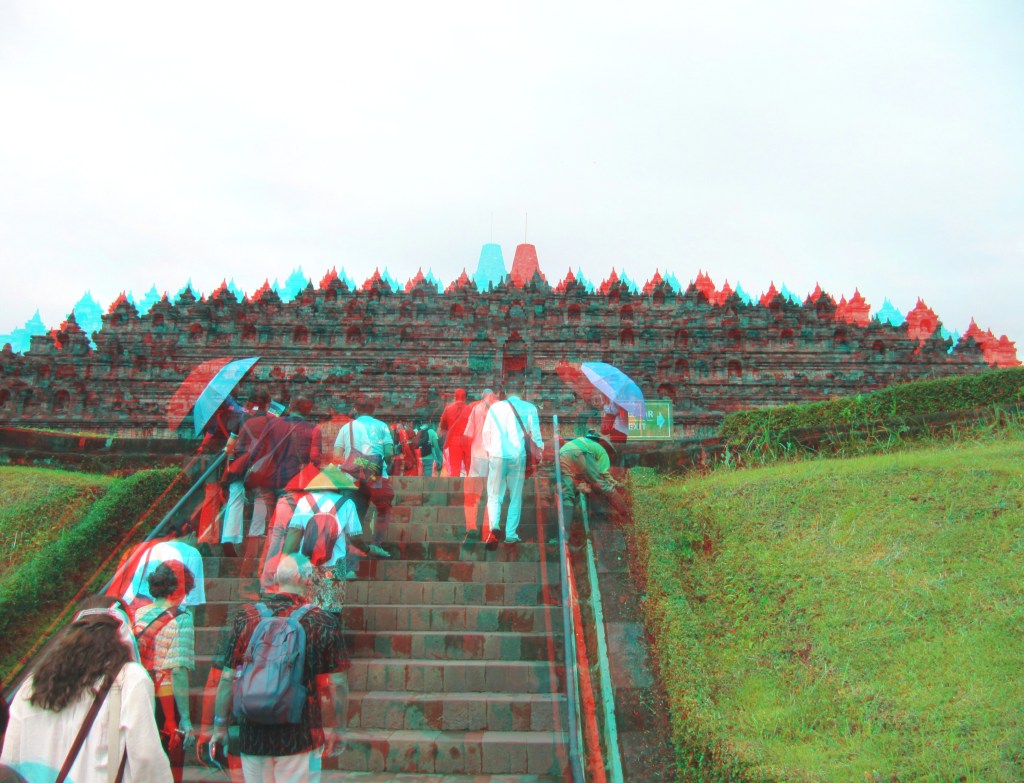
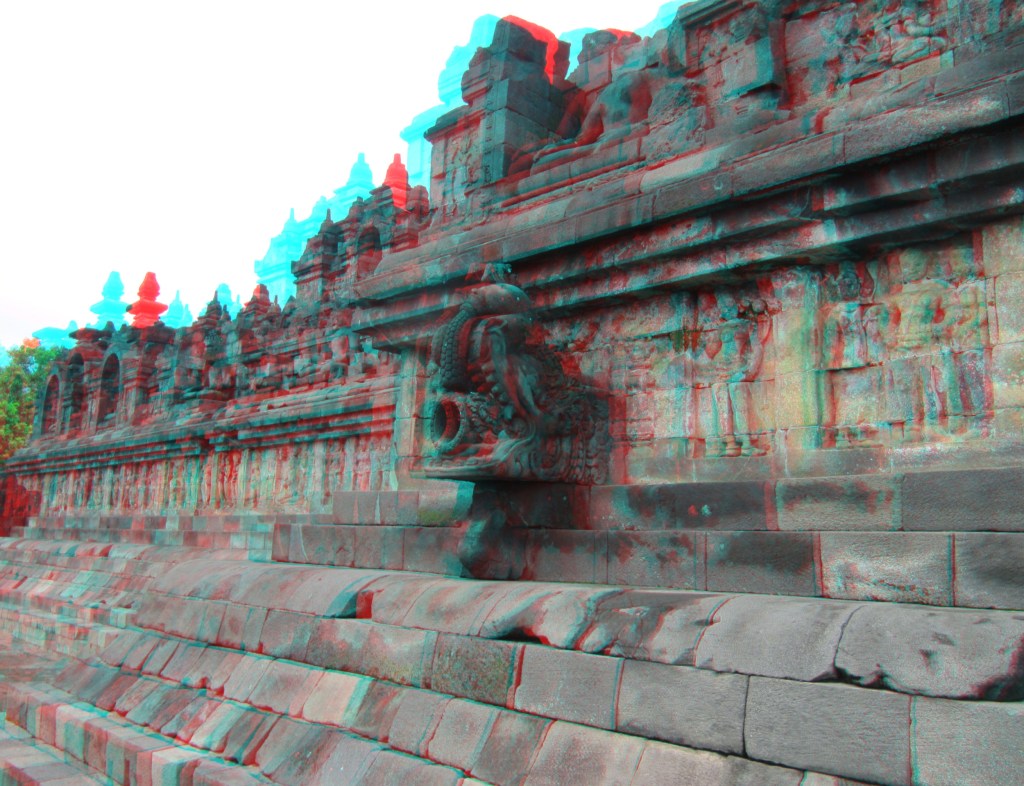
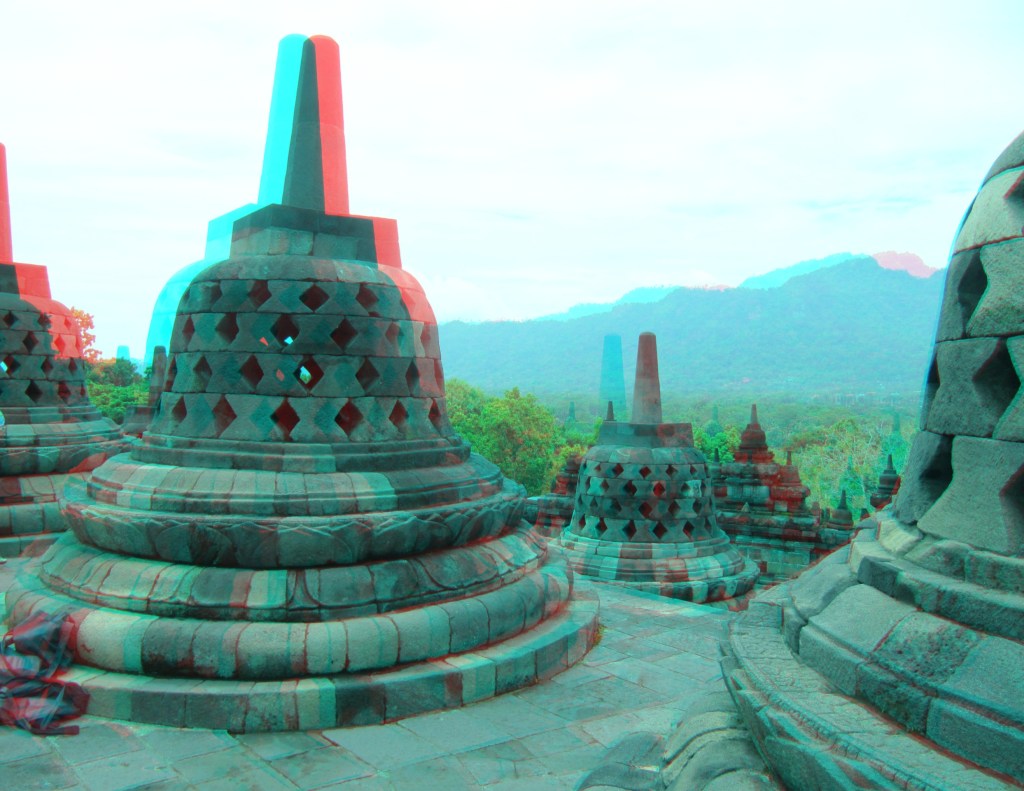
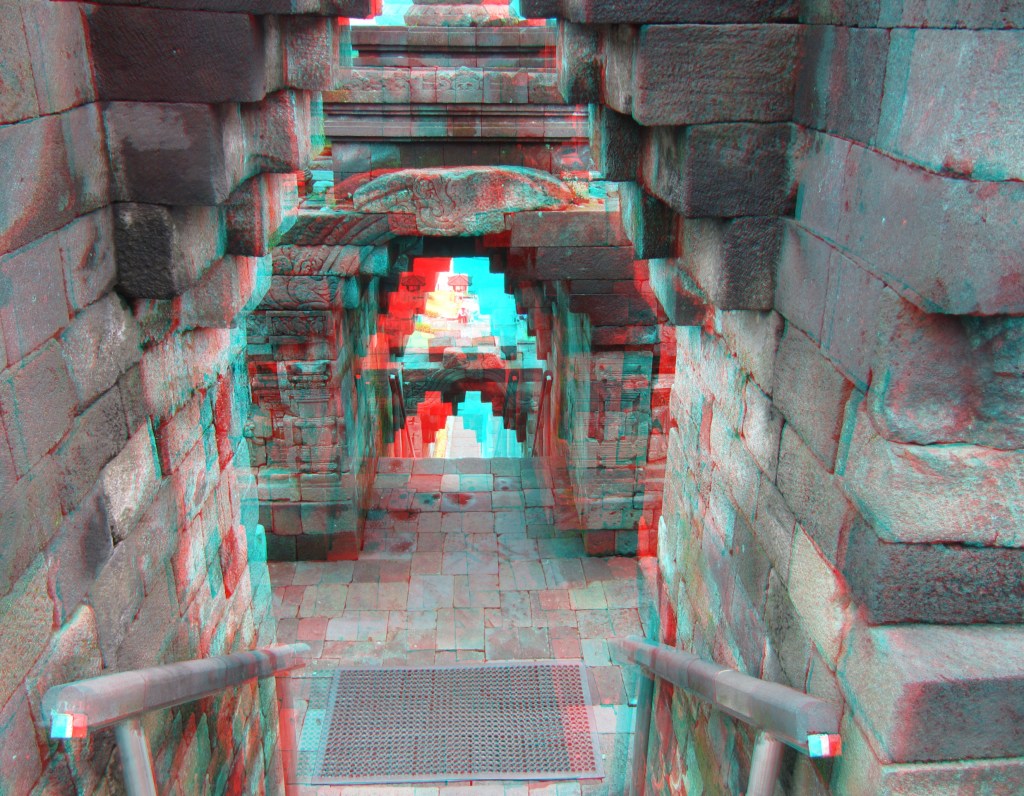
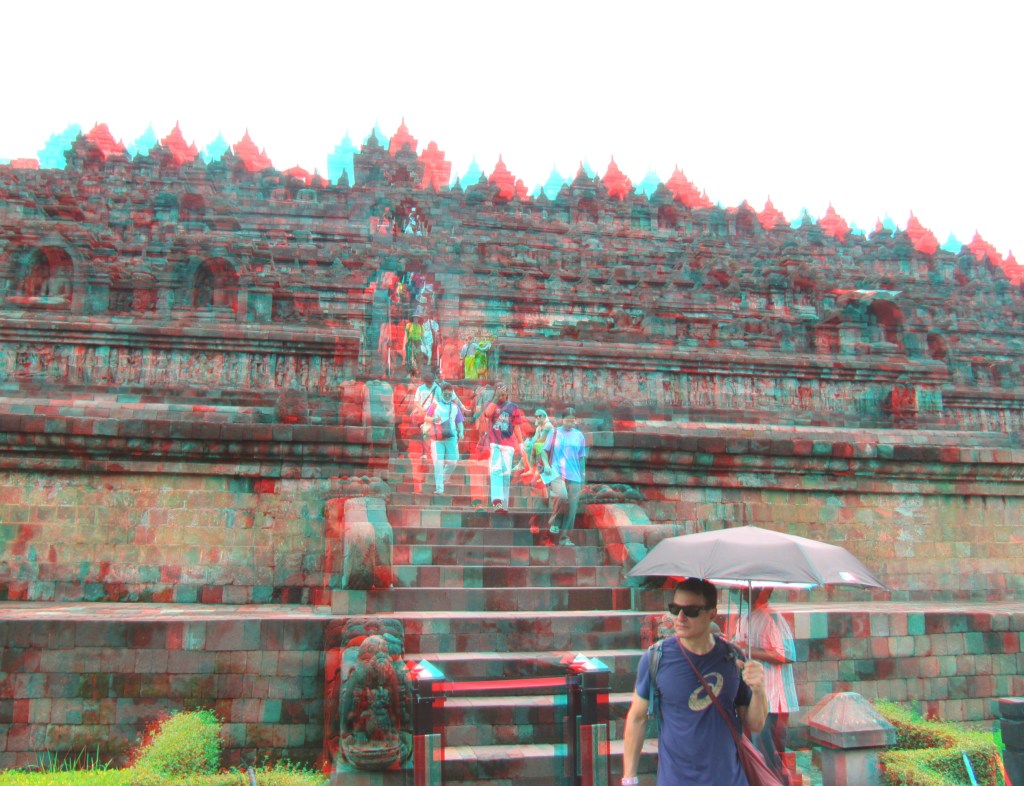
Borobudur Temple, the largest Buddhist temple in the world was built in the 8th Century AD. It is constructed as a stepped pyramid, made from grey volcanic rock, with 6 square terraces topped by 3 circular terraces with a central circular stupa at its highest point. The walls of the terraces are covered with bas-relief carvings, some 2,600 of them, illustrating Buddhist beliefs. The terraces, in groups of 3, represent the 3 stages of enlightenment in the Buddhist faith. One enters via the eastern side stairway and passes in a clockwise direction to the stairway on the next side of the temple and then up to the next level. On each level there are many niches, each containing a statue of Buddha. At the summit there are 72 ‘open’ stupas and a 10m diameter stupa in the centre of the top level. The top of the temple is about 30 metres high. The carvings of the relief panels are amazing; life-like scenes of Buddhist beliefs and stories. There are a lot of steps to climb.
For more information see; https://whc.unesco.org/en/list/592/.
Unfortunately, it was rather a grey day when I visited in January 2026 and some of my images look as if they were black and white photos. I have converted them into anaglyphs following some requests for these images, as they may be easier for some people to see in 3D. You just need red/cyan glasses to view them in 3D.